
West Asia Conflict's Economic Fallout Could Exceed Ukraine War Impact
The West Asia conflict threatens a severe global economic downturn, potentially surpassing the Ukraine war's impact.
Quick Revision
Russia's invasion of Ukraine in February 2022 caused crude oil prices to surge.
India's trade deficit widened to $294.5 billion in FY23, up from $189.5 billion in FY22.
India's current account deficit (CAD) widened to 2.1% of GDP in FY23, from 1.2% in FY22.
India's forex reserves declined by $111.9 billion in FY22 due to capital outflows.
India imports over 85% of its crude oil requirements.
Crude oil prices briefly touched $120 per barrel after the Ukraine war.
The West Asia conflict could lead to crude oil prices rising to $100-120 per barrel.
India's import bill could increase by $15-30 billion for every $10 rise in crude oil prices.
Key Dates
Key Numbers
Visual Insights
पश्चिम एशिया संघर्ष: भारत की ऊर्जा और व्यापार पर प्रभाव
यह नक्शा पश्चिम एशिया क्षेत्र की रणनीतिक स्थिति, विशेषकर होर्मुज जलडमरूमध्य, और भारत की ऊर्जा सुरक्षा तथा व्यापार पर इसके प्रभाव को दर्शाता है। संघर्ष के कारण प्रमुख समुद्री मार्गों में रुकावटें भारत के लिए गंभीर आर्थिक चुनौतियाँ पैदा करती हैं।
Loading interactive map...
आर्थिक प्रभाव: यूक्रेन युद्ध (2022) बनाम पश्चिम एशिया संघर्ष (2026)
यह डैशबोर्ड यूक्रेन युद्ध और वर्तमान पश्चिम एशिया संघर्ष के प्रमुख आर्थिक प्रभावों की तुलना करता है, जो वैश्विक अर्थव्यवस्था और भारत पर इन भू-राजनीतिक घटनाओं के गंभीर परिणामों को उजागर करता है।
- ब्रेंट क्रूड तेल की कीमत
- >$100 प्रति बैरल2022 में $117.9 (जून) के शिखर के बाद फिर से वृद्धि
- भारत का व्यापार घाटा
- $244.9 बिलियन2020-21 में $102.2 बिलियन से 2022-23 में $265.3 बिलियन तक बढ़ा, फिर 2023-24 में थोड़ा कम हुआ।
- भारत का अदृश्य अधिशेष
- $218.8 बिलियन2020-21 में $126.1 बिलियन से 2022-23 में $198.2 बिलियन और 2023-24 में $218.8 बिलियन तक बढ़ा।
- GCC देशों में भारतीय प्रवासी
- ~8.9 मिलियन
यूक्रेन युद्ध के दौरान (2022) और वर्तमान पश्चिम एशिया संघर्ष (मार्च 2026) दोनों में कीमतें $100 प्रति बैरल से ऊपर चली गईं, जो वैश्विक ऊर्जा बाजारों की भेद्यता को दर्शाता है।
उच्च आयात बिलों के कारण यूक्रेन युद्ध के बाद व्यापार घाटा काफी बढ़ गया था। पश्चिम एशिया संघर्ष से यह फिर से बढ़ सकता है।
सॉफ्टवेयर निर्यात और प्रेषण से प्रेरित यह अधिशेष व्यापार घाटे के आर्थिक झटके को कम करने में मदद करता है। पश्चिम एशिया संघर्ष से प्रेषण प्रभावित हो सकते हैं।
ये प्रवासी भारत के लिए प्रेषण का एक महत्वपूर्ण स्रोत हैं (2023-24 में कुल प्रेषण का 37.9%)। पश्चिम एशिया संघर्ष से उनके रोजगार और प्रेषण पर गंभीर असर पड़ सकता है।
Mains & Interview Focus
Don't miss it!
The escalating conflict in West Asia presents a formidable challenge to global economic stability, potentially eclipsing the repercussions observed during the Ukraine war. This geopolitical flashpoint, centered in a region critical for global energy supplies and trade routes, demands immediate and strategic policy responses from major economies.
The primary concern revolves around crude oil prices. India, importing over 85% of its oil, faces an immediate surge in its import bill, directly impacting the Current Account Deficit (CAD). During the Ukraine crisis, crude oil prices briefly soared to over $120 per barrel, triggering inflationary pressures worldwide. A similar or worse scenario from West Asia would exacerbate domestic inflation, forcing the Reserve Bank of India (RBI) to maintain a hawkish monetary stance, potentially stifling economic growth.
Unlike the Ukraine war, which primarily disrupted grain and gas supplies to Europe, the West Asia conflict threatens a more fundamental disruption to global energy arteries and maritime trade routes like the Suez Canal and Bab-el-Mandeb Strait. This geographical criticality means disruptions here have a cascading effect on global supply chains, increasing shipping costs and delivery times for a vast array of goods. For instance, recent attacks in the Red Sea have already forced rerouting, adding weeks to transit times and significantly inflating logistics expenses for Indian exports and imports.
New Delhi must proactively diversify its energy sources and strengthen strategic oil reserves. Furthermore, the government should explore innovative financing mechanisms to cushion the impact on the CAD, perhaps through bilateral currency swap agreements with key trading partners. A robust fiscal policy response, focusing on targeted subsidies and infrastructure investment, can mitigate the inflationary burden on citizens and maintain economic momentum. The long-term imperative remains reducing fossil fuel dependence through accelerated renewable energy adoption, a strategy that offers both economic resilience and environmental benefits.
Background Context
Why It Matters Now
Key Takeaways
- •The West Asia conflict's economic fallout could be more severe than the Ukraine war's impact.
- •Rising crude oil prices are a primary concern, directly affecting import-dependent nations like India.
- •Global supply chains face significant disruption, leading to increased shipping costs and delays.
- •Inflationary pressures are expected to intensify worldwide, impacting purchasing power.
- •India's trade deficit and current account deficit are vulnerable to worsening due to higher import bills.
- •Capital outflows and depreciation of the Indian Rupee are potential consequences.
- •Diversification of energy sources and strengthening strategic reserves are critical for India.
Exam Angles
GS Paper III: Indian Economy and issues relating to planning, mobilization of resources, growth, development and employment. Government Budgeting. Effects of liberalization on the economy, changes in industrial policy and their effects on industrial growth. Infrastructure: Energy, Ports, Roads, Airports, Railways etc. Investment models.
GS Paper II: International Relations - India and its neighborhood- relations. Bilateral, regional and global groupings and agreements involving India and/or affecting India’s interests. Effect of policies and politics of developed and developing countries on India’s interests, Indian diaspora. Important International institutions, agencies and fora, their structure, mandate.
Prelims: Economic and Social Development – Sustainable Development, Poverty, Inclusion, Demographics, Social Sector Initiatives, etc. General issues on Environmental Ecology, Bio-diversity and Climate Change – that do not require subject specialization.
View Detailed Summary
Summary
The ongoing conflict in West Asia could hurt the world economy even more than the war in Ukraine did. This is mainly because it could make oil prices much higher and disrupt global trade routes, leading to increased costs for everything and making it harder for countries like India to afford imports.
Economic experts have issued a stark warning that the ongoing conflict in West Asia poses a significant and escalating threat to the global economy, with potential repercussions that could be more severe than those experienced during the Ukraine war. This assessment highlights the fragility of international markets to geopolitical instability, particularly in energy-rich regions.
The anticipated economic fallout includes a substantial surge in global crude oil prices, which would directly impact energy costs for industries and consumers worldwide. Concurrently, the conflict is expected to trigger widespread disruptions across global supply chains, leading to potential shortages and increased logistics expenses. These factors are projected to fuel increased inflation rates globally, adversely affecting international trade balances and altering capital flows across various economies.
For India, a nation heavily reliant on oil imports, the economic implications are particularly concerning. The country faces the immediate prospect of substantially higher import bills due to rising crude oil prices. This increased expenditure on imports could, in turn, lead to a depreciation of the Indian Rupee, further exacerbating economic pressures through imported inflation and a widening current account deficit. The broader impact for India includes potential inflationary pressures on domestic goods and services, affecting household budgets and overall economic stability.
This development is highly relevant for the UPSC Civil Services Examination, particularly for General Studies Paper III (Economy) and its sections on international trade, inflation, energy security, and balance of payments.
Background
Latest Developments
Frequently Asked Questions
1. What specific economic indicators related to India are most vulnerable to the West Asia conflict, and what numbers should I remember for Prelims?
India's economy is highly vulnerable due to its significant crude oil import dependency and existing deficits. The key indicators to watch are:
- •Crude Oil Imports: India imports over 85% of its crude oil, making it highly susceptible to price surges.
- •Trade Deficit: This widened to $294.5 billion in FY23 from $189.5 billion in FY22. Higher oil prices will worsen this.
- •Current Account Deficit (CAD): This expanded to 2.1% of GDP in FY23 from 1.2% in FY22. Increased import bills will further strain CAD.
- •Forex Reserves: These declined by $111.9 billion in FY22 due to capital outflows, which could recur with global instability.
Exam Tip
Remember the percentage of oil imports (85%) and the trend of widening trade and current account deficits (e.g., FY22 to FY23 figures). UPSC often tests these specific numbers or their directional change.
2. UPSC often tests the difference between similar economic terms. In the context of this conflict, what's the key distinction between India's 'trade deficit' and 'current account deficit' and why is it important?
While both indicate a country's external financial position, they differ in scope.
- •Trade Deficit: This is the difference between the value of a country's imported goods and its exported goods. It focuses solely on physical goods. The West Asia conflict will primarily worsen this by increasing crude oil import bills.
- •Current Account Deficit (CAD): This is a broader measure that includes the trade deficit (goods and services), net income from abroad (like remittances, interest, dividends), and net current transfers (like foreign aid).
Exam Tip
Remember that Trade Deficit is only goods, while CAD includes goods, services, income, and transfers. A common trap is to confuse them or assume they are interchangeable. High oil prices directly impact both, but CAD reflects the overall external balance more comprehensively.
3. Why is the economic fallout from the West Asia conflict predicted to be potentially more severe than that of the Ukraine war, even though both involve energy-rich regions?
The primary reason for the potentially higher severity lies in West Asia's central role in global energy supply and its existing fragile geopolitical landscape. While the Ukraine war caused significant disruptions, West Asia is the world's largest oil-producing region. Any prolonged instability there directly threatens a much larger portion of global crude oil supply, leading to more substantial price surges and supply chain disruptions. Furthermore, the global economy is already grappling with persistent inflation and supply chain issues post-COVID-19 and the Ukraine war, making it less resilient to a new major shock.
Exam Tip
Focus on the scale of energy production and the pre-existing global economic fragility as key differentiators. UPSC might ask for comparative analysis.
4. How does the West Asia conflict's potential economic impact fit into the larger pattern of global economic instability seen since the COVID-19 pandemic and the Ukraine war?
The West Asia conflict represents another significant shock in a series of global disruptions that have characterized the last few years.
- •Persistent Inflation: The COVID-19 pandemic led to supply chain bottlenecks, and the Ukraine war further fueled energy and food price surges, contributing to global inflation. The West Asia conflict is expected to exacerbate this by pushing crude oil prices even higher.
- •Supply Chain Fragility: Both the pandemic and the Ukraine war exposed the vulnerability of global supply chains. The West Asia conflict, being in a critical trade route region, will add to these disruptions, leading to potential shortages and increased logistics costs.
- •Central Bank Responses: Central banks worldwide have already responded to previous inflationary pressures with aggressive interest rate hikes. A new crisis could force further tightening, impacting global capital flows and investment, and potentially leading to a global economic slowdown.
Exam Tip
When discussing global trends, always link specific events (COVID, Ukraine, West Asia) to broader economic phenomena like inflation, supply chain resilience, and monetary policy responses. This shows a holistic understanding.
5. Given India's high crude oil import dependency, what immediate strategic options does the Indian government have to mitigate the economic impact of this West Asia conflict?
India has several immediate strategic options, though each comes with its own challenges.
- •Diversify Oil Sources: While challenging in the short term, India can explore increasing imports from non-West Asian regions or countries willing to offer discounts, similar to its strategy during the Ukraine war.
- •Strategic Petroleum Reserves (SPR): Utilizing India's existing SPRs can provide a temporary buffer against sudden price spikes and supply disruptions, buying time for other measures.
- •Diplomatic Engagement: Intensified diplomatic efforts with key oil-producing nations and global powers to de-escalate the conflict and ensure stable energy flows are crucial.
- •Fiscal Measures: The government might need to consider targeted subsidies or tax adjustments to cushion consumers and industries from extreme fuel price hikes, balancing this with fiscal prudence.
- •Promote Energy Efficiency/Alternatives: Accelerating domestic renewable energy projects and promoting energy conservation can reduce long-term dependency, though this is a medium-to-long-term solution.
Exam Tip
For interview questions, always present a balanced view with both short-term and long-term solutions, acknowledging the complexities. Avoid taking an extreme stance.
6. How do global crude oil price surges, like those expected from the West Asia conflict, directly lead to widespread inflation and supply chain disruptions?
Crude oil is a fundamental commodity that impacts nearly every sector of the economy.
- •Direct Cost Increase: Higher crude oil prices directly translate to increased fuel costs for transportation (trucks, ships, planes) and energy for manufacturing industries. This raises the cost of producing and delivering goods.
- •Inflationary Pressure: As production and transportation costs rise, businesses pass these increased expenses onto consumers in the form of higher prices for goods and services, leading to widespread inflation.
- •Supply Chain Disruptions: Elevated fuel costs make logistics more expensive and less predictable. This can lead to delays, reduced shipping capacity, and rerouting, causing bottlenecks and shortages across global supply chains.
- •Impact on Agriculture: Fuel is essential for farming machinery and fertilizer production. Higher oil prices increase agricultural input costs, potentially leading to higher food prices.
Exam Tip
Understand the cascading effect: oil price -> transport cost -> production cost -> consumer prices (inflation) and logistics issues (supply chain). This cause-and-effect chain is crucial for Mains answers.
Practice Questions (MCQs)
1. With reference to the economic impact of geopolitical conflicts, consider the following statements: 1. Conflicts in major oil-producing regions are a primary driver of global crude oil price volatility. 2. For oil-importing nations, higher crude oil prices typically lead to increased import bills and potential currency depreciation. 3. The economic fallout from the Ukraine war primarily impacted energy prices but had negligible effects on global supply chains. Which of the statements given above is/are correct?
- A.1 only
- B.1 and 2 only
- C.2 and 3 only
- D.1, 2 and 3
Show Answer
Answer: B
Statement 1 is CORRECT: The enriched summary explicitly states that experts warn of "rising crude oil prices" and "supply chain disruptions" due to the West Asia conflict, which is a major oil-producing region. This is a well-established economic principle where geopolitical instability in such regions directly impacts global energy markets. Statement 2 is CORRECT: The enriched summary mentions that India, a major oil importer, faces "higher import bills and potential currency depreciation" due to rising crude oil prices. This is a direct and common consequence for oil-importing economies, as they need more foreign currency to pay for the same quantity of oil, leading to a depreciation of their domestic currency. Statement 3 is INCORRECT: The original summary and the enriched summary compare the West Asia conflict's potential impact to the "Ukraine war impact," implying the Ukraine war had significant global economic repercussions beyond just energy prices. The background section also mentions the Ukraine war affecting "commodity prices, trade routes, and inflation worldwide," indicating a substantial impact on global supply chains, not negligible effects.
2. Consider the following statements regarding global economic institutions and their role in managing geopolitical risks: 1. The International Monetary Fund (IMF) primarily focuses on providing long-term development loans to developing countries. 2. The Organization of the Petroleum Exporting Countries (OPEC) aims to stabilize international oil markets by coordinating petroleum policies among its member countries. 3. Disruptions in global supply chains are typically managed by the World Trade Organization (WTO) through trade dispute settlement mechanisms. Which of the statements given above is/are correct?
- A.1 only
- B.2 only
- C.1 and 3 only
- D.2 and 3 only
Show Answer
Answer: B
Statement 1 is INCORRECT: The International Monetary Fund (IMF) primarily focuses on ensuring the stability of the international monetary system, providing short-to-medium term financial assistance to countries facing balance of payments problems, and promoting international monetary cooperation. The World Bank is generally associated with providing long-term development loans and technical assistance to developing countries. Statement 2 is CORRECT: The Organization of the Petroleum Exporting Countries (OPEC) is an intergovernmental organization of 13 oil-exporting developing nations. Its main objective is to coordinate and unify the petroleum policies of its member countries and secure fair and stable prices for petroleum producers, an efficient, economic, and regular supply of petroleum to consuming nations, and a fair return on capital to those investing in the petroleum industry. Statement 3 is INCORRECT: While the World Trade Organization (WTO) deals with trade rules and dispute settlements, it does not directly "manage" disruptions in global supply chains. Supply chain disruptions are complex issues influenced by various factors (geopolitics, natural disasters, logistics, pandemics) and are often addressed by individual countries, industries, and international cooperation rather than a single dispute settlement mechanism. The WTO's role is more about ensuring smooth, predictable, and free trade.
3. In the context of India's economic vulnerability to global crude oil price shocks, which of the following measures can help mitigate the impact? 1. Increasing domestic crude oil production. 2. Diversifying energy sources towards renewables and natural gas. 3. Maintaining strategic petroleum reserves. 4. Promoting exports to offset higher import bills. Select the correct answer using the code given below:
- A.1, 2 and 3 only
- B.2, 3 and 4 only
- C.1, 3 and 4 only
- D.1, 2, 3 and 4
Show Answer
Answer: D
Statement 1 is CORRECT: Increasing domestic crude oil production directly reduces reliance on imports, thereby lowering the import bill and decreasing exposure to global price volatility. This enhances energy self-sufficiency. Statement 2 is CORRECT: Diversifying energy sources, particularly towards renewables (like solar, wind) and natural gas, reduces the overall demand for crude oil. This lessens the impact of crude oil price shocks on the economy and contributes to long-term energy security and sustainability. Statement 3 is CORRECT: Maintaining strategic petroleum reserves provides a crucial buffer against sudden supply disruptions or price spikes. India can draw from these reserves during crises to stabilize domestic prices and ensure continuity of supply, mitigating immediate economic shocks. Statement 4 is CORRECT: Promoting exports helps generate foreign exchange earnings. These earnings can partially offset the increased foreign currency outflow required for higher crude oil import bills, thereby supporting the balance of payments, strengthening the Rupee, and mitigating currency depreciation pressures. All four measures contribute to enhancing India's economic resilience against global oil price shocks.
Source Articles
Why Iran differs from Ukraine in terms of economic fallout for India and the world | Explained News - The Indian Express
UPSC Key: West Asia crisis reminder for self-reliance, Black rain in Tehran, and Passive euthanasia
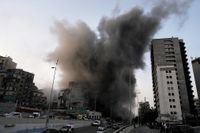
Why the timing of the war against Iran is exceptionally brutal for India
West Asia Turmoil | Morbi ceramics industry declares shutdown till April 15 | Ahmedabad News - The Indian Express
Explained: Not just oil and gas, the West Asia conflict is hitting core Indian industries | Explained News - The Indian Express
About the Author
Richa SinghPublic Policy Enthusiast & UPSC Analyst
Richa Singh writes about Economy at GKSolver, breaking down complex developments into clear, exam-relevant analysis.
View all articles →